Ballistics - 2026 Animal ForensiCon with Dr. Nancy Bradley
The 2026 Animal ForensiCon in Orlando, Florida
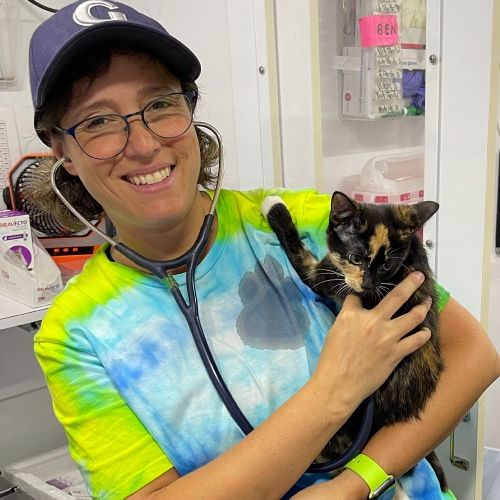
Dr. Nancy Bradley discusses the use of ballistic information in animal related crimes.
Transcript
Dr. G:
2
:We just got done learning
about ballistics.
3
:So here to tell us more about it is Dr.
4
:Nancy Bradley.
5
:Thank you so much for being here.
6
:Dr. Nancy Bradley:
7
:Hi, I'm, uh, Dr.
8
:Nancy Bradley.
9
:Uh, we talked about ballistics.
10
:It was just kind of a brief
overview of, of ballistics.
11
:Basically a little bit of background
on firearms, a few statistics, uh,
12
:potentially a little bit about ammunition
and projectiles, and then potentially
13
:what to look for in the live or the
deceased animal, uh, different signs.
14
:And then potentially how to
identify like entry/exit wounds,
15
:penetration, perforation, you know,
did it go all the way through?
16
:Did it, did it stay in the animal?
17
:And then potentially recovery of the
ballistics, and then potentially, um,
18
:creating those relationships with that
ballistic expert or the CSI folks,
19
:and then potentially ongoing training.
20
:And then the benefit of training,
uh, even on the human side, uh,
21
:especially for veterinarians and,
and then potentially applying to
22
:your examining board, especially if
you're the one doing the forensics.
23
:Usually we're few and far between, so we
can petition to our veterinary examining
24
:boards, even if we got, uh, stuff through,
say, forensic training, forensic nurse
25
:training, or an, a medical examiner's
office and get partial CE for it.
26
:But again, in that training, you're
learning stuff, but then it's just
27
:a goldmine of networking and then
establishing those relationships
28
:for when these cases arise.
29
:Dr. G:
30
:So what is the kind of
information that we can gain?
31
:Dr. Nancy Bradley:
32
:Well, I think the biggest thing my
main takeaway of, of the lecture is
33
:hopefully- not to create, you know,
weapon specialists or Dirty Harry
34
:or anything like that, but it's to
identify if there is a projectile
35
:and to collect that projectile.
36
:'Cause a lot of times, like
a BB or pellet, a lot of
37
:people take that for granted.
38
:Well, BBs are smooth bore.
39
:There's no rifling, so
there's no reconnection.
40
:But a lot of pellets have, uh, their,
their rifles are, uh, rifle- rifling
41
:in the barrel, so there is some
kind of tracing back to that weapon.
42
:So I think any time an animal is
shot, and then you potentially can
43
:recover the projectile, and you're
looking and you're seeing rifling of
44
:any kind, even if there's no suspect,
even if it's just a stray animal or
45
:just a, you know, a TNR cat, right?
46
:That, that law enforcement should
be contacted and let them put
47
:that in their property room.
48
:Uh, in my lecture also, I talked about
the serial shooter case in Phoenix,
49
:which was, I think, uh, 2005 to 2006.
50
:And, um, a lot of that was
horses and, and, and dogs,
51
:uh, across the entire valley.
52
:So, you know, Mesa in the
East Valley all the way out to
53
:Tolleson in the West Valley.
54
:So...
55
:And a lot of, uh, people died.
56
:People were crippled.
57
:A lot of animals died.
58
:Um, but if-- It ha- It
started out with the animals.
59
:And if we were maybe a little bit
more aggressive in the, in the, in the
60
:beginning and tried to assert, be more
assertive, that we could have saved
61
:lives or prevented people from being
crippled or because there were people
62
:that were shot, they're gonna be in
wheelchairs the rest of their life.
63
:Um, those two, like I said, one
gentleman received a death sentence,
64
:and the other one is life imprisonment.
65
:So, um, the-- my takeaway is that
hopefully any time an animal's shot is to
66
:get that projectile, if at all possible,
um, without endangering the animal.
67
:If it's deceased, get the,
get the projectile, you know?
68
:Get the information and potentially
hopefully have law enforcement get it.
69
:And even if they're just storing it Okay.
70
:It's like, if you remember, I was talking
to people here at the meeting, Helter
71
:Skelter, back with Charles Manson.
72
:They actually had, uh, a broken .22
73
:gun from some of the initial homicides
back, people that are old enough
74
:to remember the '60s killing in,
in Los Angeles and Beverly Hills,
75
:and that gun had been recovered.
76
:It was sitting in a property room,
and nobody connected the dots.
77
:And they finally did connect
the dots, and then it started
78
:putting the whole thing together.
79
:And if we can collect these projectiles,
especially ones with rifling, with...
80
:that are, that are traceable to a
weapon if it's ever found, then that
81
:would be, that would be meaningful.
82
:Dr. G:
83
:And for, like, investigators,
especially, like, veterinarians,
84
:and there will be veterinarians that
are doing these necropsies that are
85
:not trained in forensics, what are,
what is kinda like a do, dos or
86
:don'ts of collecting these samples?
87
:Dr. Nancy Bradley:
88
:That's the big one, and I still
have to collect my colleagues at,
89
:at Arizona Humane, even though
we do these cases all the time.
90
:Never, never use a metal instrument, okay?
91
:You have, uh, if you use
a metal instrument, you're
92
:gonna destroy the rifling.
93
:That's that fingerprinting along
the side of the projectile.
94
:Always use, uh, plastic
forceps or gloved hands, okay?
95
:It could be exam gloves or sterile gloves.
96
:It doesn't have to be sterile gloves.
97
:But you, again, you don't wanna, um, m-
mess that up in any way, and I've had, you
98
:know, I've had to correct colleagues on
that, so it, it, it is really important.
99
:Dr. G:
100
:Excellent.
101
:Well, thank you so much for your
information, and thank you for
102
:being here and for what you do.
103
:Dr. Nancy Bradley:
104
:Good.
105
:Thank you.