UF VETS Disaster Response - 2026 Animal ForensiCon with Dr. Larry Garcia
The 2026 Animal ForensiCon in Orlando, Florida
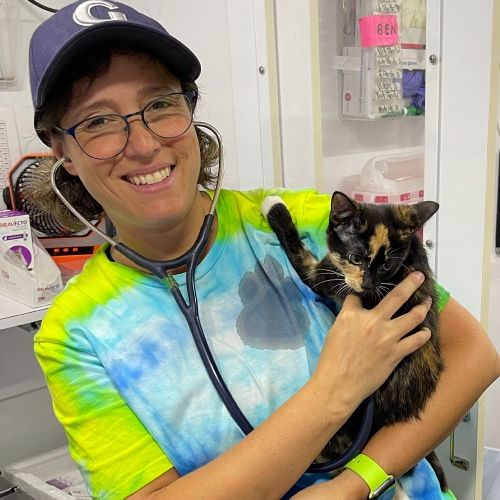
Dr. Larry Garcia, Associate Professor at the University of Florida, shares his experience at the UF Distaster Reponse Team.
Transcript
Dr. G:
2
:From Chaos to Care: Inside Animal
Disaster Response and the UF Vets Team
3
:with a Forensic Twist, we have Dr.
4
:Larry Garcia.
5
:Thank you so much for being here.
6
:Dr. Larry Garcia:
7
:You're welcome.
8
:It's good to be here.
9
:Dr. G:
10
:Can you let our, audience know who
you are and what it is that you do?
11
:Dr. Larry Garcia:
12
:Okay.
13
:I'm a veterinarian.
14
:I'm faculty at the University of Florida.
15
:I run our disaster response team.
16
:I also do some other things, uh, teaching
clinical skills and shelter medicine
17
:and some shelter medicine surgery.
18
:But for the most part, the disaster
is kind of like my passion on the side
19
:there, and mostly because of the help
that we're able to provide after disaster.
20
:Dr. G:
21
:So what does the team look like?
22
:Like, what does your day-to-day-- I mean,
I know that it's gonna change based on the
23
:disaster, but what does things look like?
24
:Dr. Larry Garcia:
25
:Well, it's kind of interesting
because most of us have day jobs,
26
:and so basically, the disaster
response is kind of like our side job.
27
:And so how that works is when there's
a disaster coming, we're in constant
28
:communication with the state, usually
daily phone calls, and I serve as
29
:point on that, and then I just kinda
communicate back to my team as things
30
:go, what things that we're anticipating.
31
:Generally, the state focuses mostly on
what needs are out there, how do we meet
32
:those needs, who can meet those needs.
33
:So for us, we're
basically like on standby.
34
:Like this time of year, we're having
our vehicles serviced, we're having
35
:our equipment updated, we're getting
our inventories up to date because
36
:as June first rolls around, it's
all about making sure we're ready.
37
:We can do a lot of different
configurations, small and large, just
38
:kinda depending on what is needed.
39
:And so a lot of what our team does
is just kinda spends time preparing.
40
:We do drills, we do exercises
with the state and as a team.
41
:We train our veterinary students
in various things in disaster
42
:response so they can come with us.
43
:And then, on a more daily basis, we
do some local animal response for
44
:animal technical rescue, so horse in a
septic tank, horse in a pool, various
45
:large animals in the wrong places.
46
:And so that's kind of a more on the
day-to-day, so that's like an all
47
:year-round thing We generally get an
actual call about quarterly, and so we
48
:have a response rig ready, and basically,
we just call our phone tree, bring all
49
:our responders together, and then we
go out and respond to the situation.
50
:The difference on the disaster side is
generally for us, September, October are
51
:like our peak disaster response times,
but we were actually at the ready just
52
:recently when there were those fires.
53
:Well, nothing was needed because
luckily most of the areas where there
54
:might be animals in need would be where
one of the larger fires were, the two
55
:shelters that are in that locality
were able to empty out and put animals
56
:into foster in safe parts of the town
so that that way those other than the
57
:facilities, the animals were in safe care.
58
:Dr. G:
59
:So I imagine here in Florida during the
fall and such, your biggest disaster is
60
:gonna be more like hurricanes, correct?
61
:Dr. Larry Garcia:
62
:Yeah.
63
:That's the most common.
64
:We have not had need of
responding to any tornadoes.
65
:But, it does seem to be like our most
common deployment on the disaster side
66
:other than the rare occasional hoarding
case does tend to be hurricanes.
67
:Dr. G:
68
:What kind of services are you
providing during those cases?
69
:Dr. Larry Garcia:
70
:So it can totally depend.
71
:Anything from getting a whole bunch
of vaccines donated because it's a
72
:situation where we need to do like
massive amounts of vaccinations to,
73
:we go and provide some sort of triage
where, you know, it's a flood situation
74
:after a hurricane or something like
that where they're bringing tons of
75
:people and their animals to a shelter
that actually allows them to cohabitate.
76
:So we're helping intake those
animals, make sure they're okay,
77
:and make sure they're healthy.
78
:If they need anything, provide any kind
of treatments and care so that the owner
79
:can take care of the animal from there.
80
:We've done where we're a field
hospital, and so in that case, it's
81
:like people who can't get to care
because there's no care available.
82
:So veterinary practices are
trying to get back on their feet.
83
:Veterinary practice staff are like dealing
with their homes, and so we come in, we're
84
:able to provide that support to them.
85
:A lot of times we actually come in
through animal control because those
86
:animal care individuals need help with
various situations and need medical care.
87
:And, you know, like they're...
88
:If they have a veterinarian,
the veterinarian's taking care
89
:of the shelter animals, and so
they need other veterinarians to
90
:take care of these other things.
91
:Sometimes we're doing health
certificates so that the adoptable
92
:animals that have no ties to the area
can get transported to a safe area.
93
:And on the large animal side, it's
been anything from like decon because
94
:it's floodwaters or something like
that to, you know, basic vaccine or
95
:some sort of care related to an injury.
96
:We're extremely dynamic in that
we can like flex and adjust.
97
:While we have five trucks and
trailers, they are set up such
98
:that we can adapt what we bring.
99
:Like if I know it's gonna be a
mostly small animal situation, I
100
:bring mostly small animal supplies
and a few backup large animal.
101
:Vice versa if I need more...
102
:So we basically tailor
to what the requests are.
103
:A lot of the requests after a hurricane
are helping a shelter, whether it's
104
:the shelter itself because they weren't
able to get the animals out, the shelter
105
:because they got search and rescue
bringing in so many animals, or like
106
:a human shelter that has people with
animals that were injured in the process.
107
:We had people that were in pet-friendly
shelters that had been in floodwaters
108
:in their home, and so their animals
were exposed to things, and they were
109
:exposed to things and trying to provide
medical care to those animals for that.
110
:So kind of any and all of
the above sort of thing.
111
:Dr. G:
112
:If somebody wants to get more
information about the disaster
113
:team, where can they go?
114
:Dr. Larry Garcia:
115
:Basically, all they would have to do is
look up UF VETS at University of Florida,
116
:or University of Florida Disaster Response
Team, and they can find our team website.
117
:And then for veterinarians, one of
the things to think about is the
118
:Florida Veterinary Medical Association
has a volunteer page that tells
119
:you what to do, and so that's super
helpful because we work with them.
120
:And so because of the way the university
is set up, it works better for
121
:veterinarians that are not directly
associated with the veterinary
122
:school to volunteer through the FVMA.
123
:This way they make sure they have their
trainings and everything in order,
124
:and then they help distribute the
veterinarians to wherever the need is.
125
:B- And, you know, it could be any
number of things where the need is.
126
:Dr. G:
127
:Excellent.
128
:Thank you for sharing this
information, and more importantly,
129
:thank you for what you're doing.
130
:Dr. Larry Garcia:
131
:You're welcome.
132
:I love what I do.