Clinical pathology - 2026 Animal ForensiCon with Dr. Laurie Millward
The 2026 Animal ForensiCon in Orlando, Florida
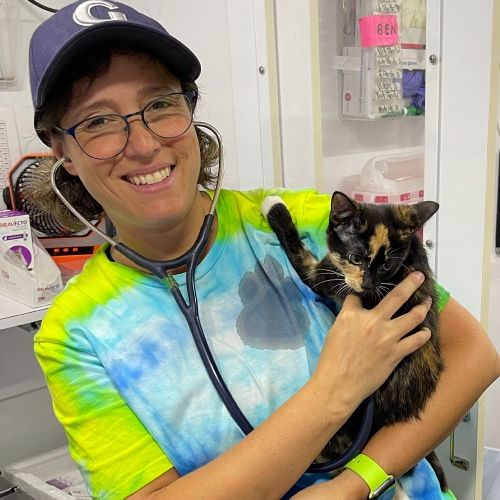
Dr. Laurie Millward from the Ohio State University describes clinical pathology and its uses in assisting in cases of animal neglect and cruelty.
Transcript
Dr. G:
2
:So we had an amazing lecture
on clinical pathology.
3
:From Ohio State, Dr.
4
:Laurie Millward, thank you
so much for being here.
5
:Dr. Laurie Millward, DACVP:
6
:Well, thanks for having me.
7
:Dr. G:
8
:So for anybody that doesn't know
who you are, can you let them
9
:know about what brought you here?
10
:Dr. Laurie Millward, DACVP:
11
:Yeah, absolutely.
12
:Um, my name's Laurie Millward, and I'm a
clinical assistant professor in clinical
13
:pathology at Ohio State University.
14
:Um, I work as a clinical pathologist,
and I teach veterinary students
15
:and our trainees in our program.
16
:Um, but I also have a lot of experience
in shelter medicine and field work, um,
17
:outreach medicine and clinical practice.
18
:Dr. G:
19
:Awesome.
20
:So I guess the first question, just
because I think that a lot of people
21
:think of pathology, and they just
think of, like, necropsies, like
22
:exams, and they don't understand.
23
:Yeah.
24
:So what is clinical pathology?
25
:Dr. Laurie Millward, DACVP:
26
:That's a great question.
27
:So, um, clinical pathology is basically
looking at laboratory samples.
28
:If we were to equate it to human
medicine, we are hematologists basically,
29
:so we look at a lot of blood work.
30
:We look at a lot of blood chemistry
values, looking at electrolytes, um, how
31
:are organs functioning within the animals.
32
:And honestly, we see samples from
more live patients than animals
33
:that have already passed, as my
anatomic pathology friends do.
34
:We look at cytology samples,
so fine needle aspirates, joint
35
:fluid, cerebrospinal fluid.
36
:All of those things, um, we look at on
a daily basis to help the clinicians
37
:that see 'em in the hospital make better
decisions about, you know, what the next
38
:test should be or what kind of treatment
plan we should get for those animals.
39
:Dr. G:
40
:What kind of information can, can you
get from animals, for instance, from
41
:neglect cases, like animal hoarding and
in some cases, like dog fighting cases?
42
:Dr. Laurie Millward, DACVP:
43
:Yeah, we, we can actually
get a lot of information.
44
:And so one of the things that
if we have the resources for for
45
:these cases is to obtain these
samples as soon as we possibly can.
46
:Basically, as soon as they come into
our facility, we wanna grab blood
47
:samples on them so that we can assess
what their red blood cell counts are,
48
:what their white blood cell counts are.
49
:And also look at, um, other parameters
such as protein levels and electrolyte
50
:levels that they are presenting
to us right from scene with.
51
:And what that does is it not only helps
us take better care of the animals once
52
:they're in our shelter, but it also helps
us determine further evidence that helps
53
:us show that the animal was neglected.
54
:Maybe it wasn't provided with enough
food or enough water or maybe there
55
:were signs of abuse or failure to
provide medical care to that animal,
56
:so, so they ended up developing these
medical conditions, um, that we can
57
:actually detect through blood work.
58
:Dr. G:
59
:And we can use these results also
to identify if they're responding to
60
:treatment and to just further prove
that it was malnutrition and it was
61
:not, like, a disease process, right?
62
:Dr. Laurie Millward, DACVP:
63
:Exactly, and that is actually one of the
coolest things about shelter medicine,
64
:is being able to show that as long
as these animals get basic care, so
65
:water, food, a balanced diet, and just
shelter, they end up correcting these
66
:abnormalities that they present with.
67
:And we can see these values in their blood
work go back to normal over time, which
68
:is, which is a wonderful thing to be able
to show in court that nothing special was
69
:needed by these animals to get better.
70
:It was just basic care.
71
:And it's, it just provides another
element of evidence in the case
72
:that helps, um, prove that,
that neglect or abuse happened.
73
:Dr. G:
74
:I'm very grateful in the fact that I,
I have access to individuals like you.
75
:You know, I can send out samples,
and we can do a lot of analysis,
76
:but I know that I hear from a lot of
especially, like, rural, um, shelters-
77
:Yeah ... that do not have a lot of money.
78
:So if they don't have a lot of
funds, can they still use clinical
79
:pathology to help their cases?
80
:Dr. Laurie Millward, DACVP:
81
:That is a great, great, um,
question, so the answer is yes.
82
:Um, you don't have to have a lot of money.
83
:You don't have to run a full
complete blood, blood count or
84
:CBC or chemistry on these animals.
85
:Really, all you need is
a PCV and a total solids.
86
:PCV is a packed cell volume, which
is where we just take a little
87
:bit of blood in a tiny tube.
88
:We spin it down, and we can see if the
animal's anemic or if they're dehydrated.
89
:We can tell from those results.
90
:And then if you can make a blood
smear, all you need is a glass slide
91
:and a drop of blood, and you look
at it underneath the microscope.
92
:And you can tell so much about the
animal's health and wellbeing just
93
:based on those, um, easy-to-do,
cheap, and inexpensive things.
94
:Dr. G:
95
:So anybody that, like veterinarians
and technicians in shelters that
96
:wanna get better at looking at these
slides and stuff- Yeah ... what
97
:resources are there for them?
98
:Dr. Laurie Millward, DACVP:
99
:So I would first recommend
getting a good hematology book.
100
:So there are many out there.
101
:They have a lot of good resources on how
to look at a blood smear, what you're
102
:looking for, how to estimate platelet
count, white blood cell count, that
103
:sort of thing, just from a blood smear.
104
:But then also doing things like CE.
105
:So going to, um, blood smear wet labs
and, and practicing making a blood
106
:smear, reading a blood smear and
stuff can give you a lot of really
107
:good, uh, experience and information
on how to look at those things.
108
:Dr. G:
109
:Excellent.
110
:This is amazing.
111
:Thank you for what you're doing.
112
:Thank you.
113
:Thank you for being here, and thank
you for sharing all this with us.
114
:Dr. Laurie Millward, DACVP:
115
:Well, thanks for interviewing me.